




News
News, Publications, Projects, Blog Articles & Podcast Episodes from the Institute


Protecting Children and Young People in an Increasingly Digitalized World
In the latest issue of KJug, Claudia Lampert presents the EU Kids Online research consortium's findings on how children and adolescents view a potential social media ban. Kira Thiel shares insights from her dissertation, which examines how adolescents cope with problematic online experiences and the strategies they use to manage them.


A Portrait of Harry Hermann Spitz
Who was Harry Hermann Spitz? The short answer: From 1947 to 1957, he was the music director of Northwest German Broadcasting (NWDR), or North German Broadcasting (NDR). Hans-Ulrich Wagner provides the longer answer in his article for the New German Biography portal.

No Child’s Play – Protecting Minors in the Digital Age
In his nonfiction book, Stephan Dreyer analyzes the complex field of youth media protection. Through his examination of legal regulations, actual usage, and technological developments, he offers valuable insights for individuals involved in this topic in the realms of practice, administration, politics, and academia.

Communicative AI as Methodological Toolbox and Research Companion
The editorial board of M&K is calling for submissions for an English-language special issue of M&K on “Communicative AI as a Methodological Toolbox and Research Companion.” The guest editors are Stephanie Geise, Marko Bachl, Merja Mahrt, and Annie Waldherr.

80 Years of the Radio Program “Echo of the Day”
How should radio journalism have sounded in the aftermath of National Socialism? What qualifications did journalists need to help shape this new beginning? To mark the 80th anniversary of the radio show “Echo of the Day,” media historian Hans-Ulrich Wagner discusses these topics on the WDR program “Current Hour.”

Thomas Mann’s BBC Speeches from Exile and Postwar Radio Broadcasting
In this episode of "historycast, " host Heiner Wember speaks with media historian Hans-Ulrich Wagner about the impact of Thomas Mann’s "German Listeners" speeches, which were broadcast on the BBC's international service at the time, and the significance of public broadcasting for democratic development in Germany up to the present day.

How Can AI Development Become Safer—and More Equitable?
In his article, Matthias C. Kettemann explains why it is good that Dario Amodei, Sam Altman, and Elon Musk want to slow down. However, he adds, "It is important that they share the time they hope to gain with those who need it most, so that they can acquire the capabilities and expertise necessary to enable both private and public use of AI for the benefit of all."

International Exchange: Visitors from Eight African Countries
As part of an informational tour organized by the Goethe-Institut, African media professionals met with Jan-Hinrik Schmidt at the HBI to discuss the German media system and current trends in media consumption.
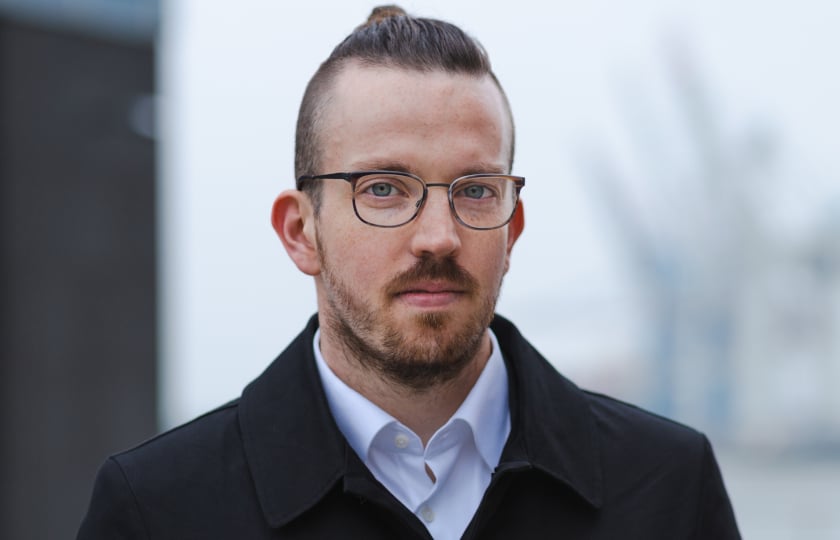
Could the European Platform W Social Be an Alternative to X?
W Social is emerging as a European alternative to well-established social media platforms like X, offering greater data protection and less hate and disinformation. However, for such platforms to truly be an alternative, there needs to be "societal momentum," Jan Rau says in an interview.