Children Online: Research and Evidence (CO:RE)

The international data situation regarding the effects of the digital transformation on children and young people is extensive, heterogeneous and sometimes contradictory. As part of the project, the knowledge platform core-evidence.eu was created with the participation of international researchers and representatives of relevant interest groups, which provides a comprehensive and, at the same time, contextualised overview of the research situation in Europe.

Children Online: Research and Evidence (CO:RE) is a ‘Coordination and Support Action’ within the framework of HORIZON 2020. The aim was to develop a pan-European knowledge platform on the experiences of children and young people in digital communication spaces and the effects of technological transformations on children and young people. The platform was designed to be a central point of contact for researchers and decision-makers in education and politics while bridging the gap between research and practice.

The project was organised into eleven work packages, led by experts from nine European countries. The entire project – the conception and implementation of the knowledge platform, as well as all communication and transfer activities – was coordinated by the HBI.

core-evidence.eu is a knowledge platform that provides access to extensive knowledge from over 35 European countries. This knowledge is organised into six topics and can be accessed in different ways:

  1. Evidence Base & Data Directory: These two databases provide a quick overview of international publications, studies and existing data sets (since 2014). The CO:RE Data Explorer offers visual access to the EU Kids Online 2020 survey data.
  2. Methods Toolkit & Handbook: This section contains methodological foundations and valuable information on suitable methodological approaches.
  3. Education Toolkit: This resource provides essential information on how research can be incorporated into educational practice.
  4. Theories Toolkit: This toolkit focuses on understanding theories, linking them to available evidence, and applying them in practice. In addition to information on key theories and concepts related to children’s digital lives, various resources (e.g. blogs, vlogs, webinars, reports, etc.) are provided.
  5. Compass for Research Ethics: The compass addresses ethical issues that arise when children participate in online research projects, as well as the topics of data protection and research integrity. A separate animated film has been developed for research with children, which explains their rights as participants in research projects in a way that children can understand.
  6. Resources for Policymakers: The CO:RE Policy Directory provides an overview of relevant guidelines and public, civil society and private sector organisations involved in policy-making in EU member states.

In addition to the content of the knowledge platform, various communication, transfer and dissemination activities were also tested to increase the CO:RE knowledge platform’s visibility and facilitate access to existing knowledge.

The project was funded under DT-TRANSFORMATIONS-07-2019: ‘The impact of technological transformations on children and youth’ (Grant agreement ID 871018).

Official CO:RE website: https://core-evidence.eu/

Project Results

CORDIS: Children Online: Research and Evidence – A knowledge base on children and youth in the digital world

‘A knowledge base on children and youth in the digital age’, presentation by C. Lampert at the European Parliament Committee on Culture and Education on 1 March 2023 (online).

“Fostering the societal impact of research on children and media: The knowledge platform core-evidence.eu”, presentation by Aroldi, P., Cino, D., Dopona, V., Hasebrink, U. Lampert, C., Ólafsson, K. at the ECREA 2022, 9th European Communication Conference conference on 20 October 2022 in Aarhus, Denmark.

Project Team

Prof. em. Dr. Uwe Hasebrink (bis 30.09.2021),  Dr. Claudia Lampert, Valentina Dopona, M.A. (bis 31.12.2022)
Project details

Overview

Start of the term: 2020; End of term: 2023

Research programme: RP 3 Knowledge for the Media Society

Persons involved

Co-operation partners

  • Prof. Dr. Piermarco Aroldi, Università Cattolica del Sacro Cuore, Italien
  • Kjartan Ólafsson, University of Akureyri, Iceland
  • Prof. Veronika Kalmus, University of Tartu, Estland
  • Prof. Sonia Livingstone, London School of Economics and Political Science (LSE), Großbritannien
  • Prof. Sirkku Kotilainen, Tampere University, Finnland
  • Prof. Elisabeth Staksrud, University of Oslo (UiO), Norwegen
  • Prof. Dr. em. Brian O'Neill, Technological University Dublin, Irland
  • Sabrina Vorbau, European Schoolnet, Belgien
  • Andreas Ott, TAKEPART Media & Science GmbH, Deutschland

Area of competence:

Competence Area Growing Up in Digital Media Environments

Contact person

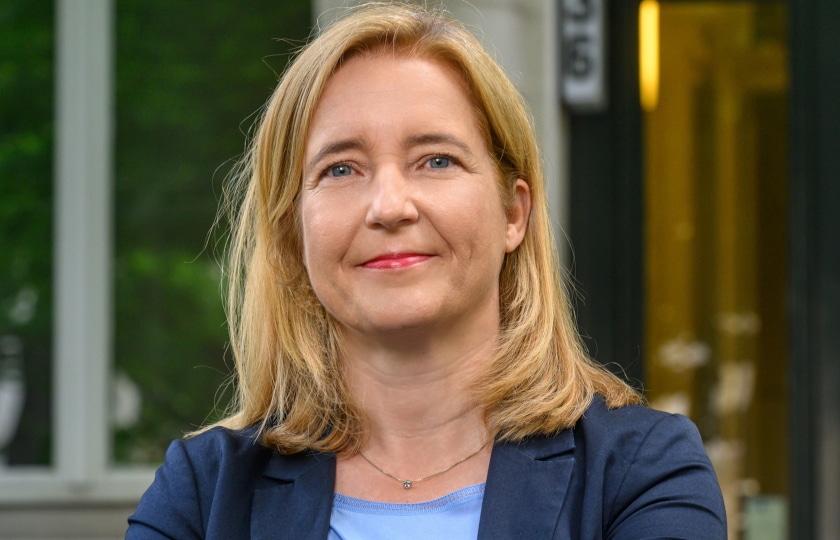
Claudia Lampert

Dr. Claudia Lampert

Senior Researcher Media Socialization & Health Communication

Leibniz Institute for Media Research | Hans-Bredow-Institut
Warburgstraße 30b
20354 Hamburg

Similar projects & publications

Publikation Recently Published

Visualizing Regulatory Ecosystems: The AI Act as a Case Study

The article by Magdalena Stratmann, Tobias Mast, and others was developed as part of the STEAM project, "Informing Regulatory Reasoning on Algorithmic Systems in Societal Communication with STEAM." It introduces Architectural Ecosystem Modeling, a visual method that makes the institutional structures of the AI Act visible. This method analyzes responsibilities and dependencies and identifies gaps, overlaps, and opportunities for coordination within the regulatory framework.

eine Frau hinter einem Tisch mit ablehnender Haltung gegenüber Zeitungen auf dem Tisch.
Projekt New Project!

Practices of News Avoidance and Their Implications for Public Connection

What are the effects of news avoidance on belonging to different publics and on political participation? And to what extent do these dynamics contribute to the fragmentation of public spheres? This study examines the effects of different practices of news avoidance on individuals‘ public connection.

Projekt BMFTR Project

Podcasts: Actors, Topics, and Misinformation

As audio media, such as podcasts, become more widely used, the risks of them distributing misinformation, disinformation, and fake news increase. The collaborative project “Systematic Observation of New Auditive Risks” (SONAR) examines the structure of online audio media offerings and develops methods for identifying relevant narratives and manipulation strategies.

Publikation Merz issue and Podcast Available!

Thoughts on the Debate Over Media Bans

Dr. Claudia Lampert, together with Klaus Lutz (Parabol Media Center), edited the latest issue of the media education journal “merz” (2/2026). The issue is titled “Everything Under Control? Thoughts on the Debate Over Media Bans.” Dr. Stephan Dreyer also contributed an article.

Publikation Available for Download

Annual Report 2023-2025

Evaluation, growth, our 75th anniversary, and a new building. The years from 2023 to 2025 were challenging yet fruitful. Our research output was impressive, and our social impact was significant. This annual report provides a brief overview of our activities.

Publikation Open Access Publication

Determinants of Verification Behavior in Generative Search

Generative AI is being increasingly integrated into search engines, but it has been criticized for producing content that sounds plausible yet is sometimes inaccurate. Little is currently known about the factors that prompt users to verify these responses. The study by Eva-Luise Knor, Michael V. Reiss, Judith Möller, and Lisa Merten addresses this knowledge gap.

Publikation Recently Published

Platforms, Online Surveillance, and the European Union: The Digital Services Act (DSA)

In their open-access article, Prof. Dr. Judith Möller, Ronan Ó Fathaigh, Bengi Zeybek, and Rocco Bellanova explore how the DSA facilitates public and private surveillance practices regarding content disseminated on online platforms.

Cover of issue 2/2026 M&K
Publikation Open Access Publication

M&K 2/2026 Has Been Published

The February 2026 issue of M&K features articles that explore the understanding of roles and the transformative potential of peripheral actors in the DACH region. Other articles examine developments in sports coverage in German daily newspapers from 2011 to 2021 and the usage patterns of ChatGPT, as well as anthropomorphic role attributions. You can download all of these articles free of charge.

Front Page of the Working Paper
Publikation Working Paper Available for Download

Babies and Toddlers in Family Influencing

In what ways and how often are babies and young children (ages 0–5) depicted on commercially oriented German-language social media profiles on Instagram, TikTok, and YouTube? Stephan Dreyer, Claudia Lampert, Kira Thiel, and others analyze this question using qualitative and quantitative methods. They also critically discuss the findings in light of the applicable legal framework and media ethics considerations.

Publikation Open Access Publication

Assessing Age Assurance Technologies: Effectiveness, Side-Effects, and Acceptance

In the article “Assessing Age Assurance Technologies: Effectiveness, Side-Effects, and Acceptance,” Dr. Wouter Lueks, Dr. Stephan Dreyer, Prof. Dr. Hannes Federrath, and Prof. Dr. Judith Simon analyze existing age verification methods.

1 2 3 14

Page 1 from 14

Newsletter

Information about current projects, events and publications of the institute.

Subscribe now