
Siegfried Lenz: How the Author Uses the Media

With novels and short stories such as “The Germyan Lesson”, “Rebellion” or “The Lightship”, Siegfried Lenz became one of the most popular German-language writers. In his early years, Lenz was also a prolific radio playwright. Dr. Hans-Ulrich Wagner has documented in three extensive volumes what Lenz wrote for radio, mostly for NDR, from the 1950s to the 1970s.

The writer Siegfried Lenz was closely connected to public service broadcasting in many ways. He was partly active as a consultant and editor for the radio, but above all, he wrote numerous texts for the radio since the end of the Second World War and took part in many productions. For him, radio became an institution that gave him important income. However, it was also a medium, which offered him new possibilities of technical and artistic expression.

This “media work” represents a central part of his work, but has been insufficiently researched until now. Therefore, the project aims at collecting the broadcasting work of this author systematically, and, based on this author, at preparing an exemplary case study on the role of public broadcasting in the interaction between writers and broadcasting.

The three-volume “Rundfunkstücke” [Radio Plays], edited by Hans-Ulrich Wagner, will be published by Hoffmann und Campe on 7 December 2024.

Media Coverage of the Project

Some media reports have mentioned the publication of the three volumes of radio plays by Siegfried Lenz as well as accompanying readings. The following sources are all published in German:

Project Description

There are two areas in the context of “writers and the media” that have not been systematically dealt with so far:

  • On the one hand, Siegfried Lenz’s radio work is not yet fully known as part of a biography of his works and has at best only been investigated to some extent in research.
  • On the other hand, the role of public service broadcasting – and here in particular the “house station” of the author living in Hamburg: the Norddeutscher Rundfunk (NDR) – as a decisive player in the “literary business” has not yet been analysed and its diverse tasks in the public value areas of cultural life and cultural heritage have not been highlighted.

The investigation intends to answer the following questions:

  • What is the scope of the literature work by Siegfried Lenz for broadcasting?
  • What quality do the various forms of this author’s collaboration have and what role do they play in a biography of Siegfried Lenz’s work?
  • What role does public service broadcasting play in the production and distribution of literary texts and what tasks does it carry out in a diversified literary business?

The death of Siegfried Lenz in 2014 and the organisation of the literary estate by the Siegfried Lenz Foundation and the German Literature Archive (DLA) in Marbach have created a new starting point for document research on these issues. In addition to evaluating the holdings of the estate and the corresponding transmissions in the ARD broadcasting archives, the project aims to produce an exemplary case study on the role of public service broadcasting in the interaction between writers and broadcasters. The project should serve as a model for similar studies.
Project details

Overview

Start of the term: 2019; End of term: 2024

Research programme: RP 3 Knowledge for the Media Society

Persons involved

Area of competence:

Competence Area Media History

Contact person

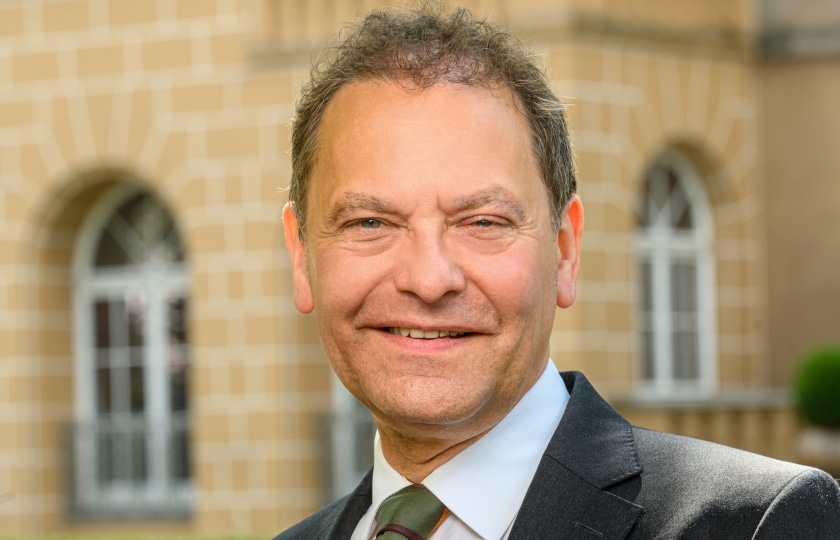
Hans-Ulrich Wagner

Dr. Hans-Ulrich Wagner

Senior Researcher Media History

Leibniz Institute for Media Research, Hans-Bredow-Institut
Warburgstraße 30b
20354 Hamburg

Similar projects & publications

Publikation Review of a Dissertation

Government Public Relations in New Media

For years, the democratic legitimacy of government public relations has been a topic of discussion in academic literature and constitutional jurisprudence. Tobias Mast reviews a recently published dissertation on the subject, exploring the untapped potential of interdisciplinary legal scholarship in relation to commonly accepted empirical assumptions.

Publikation Article for Friedrich-Ebert-Stiftung

Platform Badges for Civic Communication

Digital platforms have become central infrastructures for political communication and social negotiation processes. In his article, Jan Rau examines platform badges, which are tools that platforms use to fulfill their obligation to mitigate risk by creating positive incentives for users to adhere to certain communicative norms.

Cover des Arbeitspapiers
Publikation Working Paper for Download

Responsibility in the Platform Quadrangle

This working paper by Tobias Mast comments on the European Court of Justice's recent Russmedia ruling and sets out the premises for a relationship between EU legal acts in the digital single market that respects fundamental rights.

ein Kabel führt in ein Smartphone
Projekt Project with Helmut Schmidt University

Data Collection and Analysis on TikTok and YouTube

In order to develop the best practices for collecting and analyzing data on short video platforms, Gregor Wiedemann's Media Research Methods Lab at the HBI is participating in a Helmut Schmidt University project examining the German Armed Forces' representation on TikTok and YouTube.

Eine Fernbedienung zeigt auf einen Bildschirm mit unscharfen bunten Bildern
Projekt International Cooperation Project

Euromedia Ownership Monitor

The Euromedia Ownership Monitor provides policymakers and the general public with in-depth insights into the extent of media ownership transparency in the EU. It was updated in 2025.

Cover of the special issue on datafication, 1/2026, M&K
Publikation M&K Issue 1/2026 Published Open Access

On the Datafication of Communication

The special issue of M&K titled "The Datafication of Communication: New Methodological Approaches and Challenges" has been published as Issue 1/2026. The guest editors are Julia Niemann-Lenz, Tim Schatto-Eckrodt, Emese Domahidi, and Merja Mahrt.

Cover of the book
Publikation Article Published in Handbook

Growing Up in Data-Intensive and Automated (Media) Environments

Dr. Claudia Lampert examines changing usage practices and possible implications for socialization research in the chapter “Growing Up in Data-Intensive and Automated (Media) Environments” of the handbook “Media Socialization in ‘Smart’ Environments. Self- and Social Development in the Context of Datafication and Automation,” edited by Laura Sūna and Wolfgang Reißmann.

Cover of the report “Generative AI from the Perspective of Young People”
Publikation Publication on Safer Internet Day 2026

Generative AI from the Perspective of Young People

The use of generative AI, especially ChatGPT, is now firmly established among young people online. A study by Kira Thiel, Claudia Lampert and Eleysa Memis explores young people's views on generative AI, highlighting its significance in their daily lives.

Cover des Arbeitspapiers
Publikation Working Paper Available for Download

Public Service Media Enabling Dialogue

For the project “Dialog Formats in Public Service Media,” Magdalena Stratmann conducted a literature analysis on “The Role of Public Service Media as Enablers of Dialogue in Digitalized Societies.” This analysis is now available for download as a working paper.

Vorschau des Artikels von Christian Ollig auf epd Medien
Publikation Article for epd Medien

How the Digital Services Act (DSA) Regulates Platforms

U.S. politicians accuse the European Union of endangering freedom of expression with the Digital Services Act (DSA). However, media law expert Dr. Christian Ollig argues that the DSA actually protects users' opinions from arbitrary censorship by platform operators. It also gives users a legal basis to assert their freedom of expression against large platform operators at the European level.

1 2 3 13

Page 1 from 13

Newsletter

Information about current projects, events and publications of the institute.

Subscribe now