

Transnational Media Histories: Cooperation with Macquarie University, Sydney

Relationships between media and by media do not stop at borders. The cooperative project with the Macquarie University in Sydney investigates such transnational histories of media.

From 2015 to 2018, the Research Centre Media History at Universität Hamburg and the Centre for Media History at Macquarie University in Sydney work together to research and write a history of media beyond national boundaries and enable transnational research from a globally “entangled” perspective. This project aims to establish a close collaboration between Hamburg and Sydney in the research and teaching of media history. It will facilitate frequent exchanges of senior and junior researchers, including postgraduates, to discuss and explore “transnational media histories” as well as joint workshops, conferences and research projects. The academic starting point of “Transnational Media Histories”, funded by the DAAD [German Academic Exchange Service], is the research approach on “Entangled Media Histories”, which assumes a mutual entanglement.

Project Description

The new German-Australian cooperative network connects two institutions that decidedly work on the history of media: the Research Centre Media History at Universität Hamburg and the Centre for Media History at Macquarie University in Sydney. The starting point of this cooperation is the research approach of “entangled media histories”, drawing upon and contributing to histoire croisée, connected history, and Verflechtungsgeschichte in the field of media and communication studies. Thus, the project, which is funded by the DAAD [German Academic Exchange Service] from 2015 to 2019, aims to research transnational relations of and by media. The project “Transnational Media Histories” focuses on the frequent exchanges of researchers and PhD students in the field of communication and media history between Hamburg and Sydney.

The stay of Dr. Hans-Ulrich Wagner, head of the Research Centre Media History, as a visiting fellow at Macquarie University in November/December 2015, led to this project. In a keynote speech with the title “Chances and Challenges of Doing Transnational and Global Entangled Media History”, he outlined the project topic. In May/June 2016, Prof. Dr. Bridget Griffen-Foley, director of the Centre for Media History at Macquarie University, was a guest researcher at the Insitute for Media and Communciation at Universität Hamburg and the Research Centre Media History.

Furthermore, Mike Nugent, a PhD Student from Sydney, was a guest researcher at the Research Centre Media History. A common basis will be established through seminar papers, keynotes, conferences and visits. The medium-term goal is the stabilisation of academic exchange, as well as the realisation of a joint transnational project.
Project details

Overview

Start of the term: 2015; End of term: 2017

Research programme: RP 3 Knowledge for the Media Society

Persons involved

Area of competence:

Competence Area Media History

Contact person

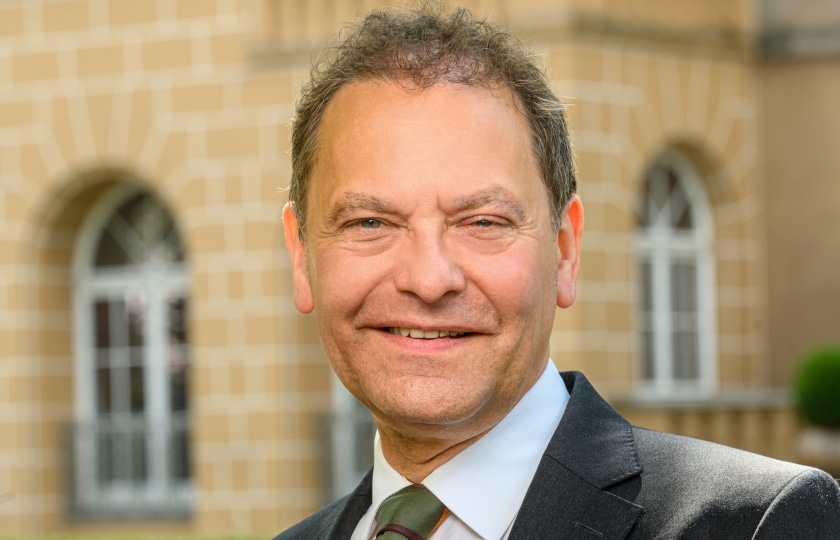
Hans-Ulrich Wagner

Dr. Hans-Ulrich Wagner

Senior Researcher Media History

Leibniz Institute for Media Research, Hans-Bredow-Institut
Warburgstraße 30b
20354 Hamburg

Similar projects & publications

Publikation Recently Published

Visualizing Regulatory Ecosystems: The AI Act as a Case Study

The article by Magdalena Stratmann, Tobias Mast, and others was developed as part of the STEAM project, "Informing Regulatory Reasoning on Algorithmic Systems in Societal Communication with STEAM." It introduces Architectural Ecosystem Modeling, a visual method that makes the institutional structures of the AI Act visible. This method analyzes responsibilities and dependencies and identifies gaps, overlaps, and opportunities for coordination within the regulatory framework.

eine Frau hinter einem Tisch mit ablehnender Haltung gegenüber Zeitungen auf dem Tisch.
Projekt New Project!

Practices of News Avoidance and Their Implications for Public Connection

What are the effects of news avoidance on belonging to different publics and on political participation? And to what extent do these dynamics contribute to the fragmentation of public spheres? This study examines the effects of different practices of news avoidance on individuals‘ public connection.

Projekt BMFTR Project

Podcasts: Actors, Topics, and Misinformation

As audio media, such as podcasts, become more widely used, the risks of them distributing misinformation, disinformation, and fake news increase. The collaborative project “Systematic Observation of New Auditive Risks” (SONAR) examines the structure of online audio media offerings and develops methods for identifying relevant narratives and manipulation strategies.

Publikation Merz issue and Podcast Available!

Thoughts on the Debate Over Media Bans

Dr. Claudia Lampert, together with Klaus Lutz (Parabol Media Center), edited the latest issue of the media education journal “merz” (2/2026). The issue is titled “Everything Under Control? Thoughts on the Debate Over Media Bans.” Dr. Stephan Dreyer also contributed an article.

Publikation Available for Download

Annual Report 2023-2025

Evaluation, growth, our 75th anniversary, and a new building. The years from 2023 to 2025 were challenging yet fruitful. Our research output was impressive, and our social impact was significant. This annual report provides a brief overview of our activities.

Publikation Open Access Publication

Determinants of Verification Behavior in Generative Search

Generative AI is being increasingly integrated into search engines, but it has been criticized for producing content that sounds plausible yet is sometimes inaccurate. Little is currently known about the factors that prompt users to verify these responses. The study by Eva-Luise Knor, Michael V. Reiss, Judith Möller, and Lisa Merten addresses this knowledge gap.

Publikation Recently Published

Platforms, Online Surveillance, and the European Union: The Digital Services Act (DSA)

In their open-access article, Prof. Dr. Judith Möller, Ronan Ó Fathaigh, Bengi Zeybek, and Rocco Bellanova explore how the DSA facilitates public and private surveillance practices regarding content disseminated on online platforms.

Cover of issue 2/2026 M&K
Publikation Open Access Publication

M&K 2/2026 Has Been Published

The February 2026 issue of M&K features articles that explore the understanding of roles and the transformative potential of peripheral actors in the DACH region. Other articles examine developments in sports coverage in German daily newspapers from 2011 to 2021 and the usage patterns of ChatGPT, as well as anthropomorphic role attributions. You can download all of these articles free of charge.

Front Page of the Working Paper
Publikation Working Paper Available for Download

Babies and Toddlers in Family Influencing

In what ways and how often are babies and young children (ages 0–5) depicted on commercially oriented German-language social media profiles on Instagram, TikTok, and YouTube? Stephan Dreyer, Claudia Lampert, Kira Thiel, and others analyze this question using qualitative and quantitative methods. They also critically discuss the findings in light of the applicable legal framework and media ethics considerations.

Publikation Open Access Publication

Assessing Age Assurance Technologies: Effectiveness, Side-Effects, and Acceptance

In the article “Assessing Age Assurance Technologies: Effectiveness, Side-Effects, and Acceptance,” Dr. Wouter Lueks, Dr. Stephan Dreyer, Prof. Dr. Hannes Federrath, and Prof. Dr. Judith Simon analyze existing age verification methods.

1 2 3 14

Page 1 from 14

Newsletter

Information about current projects, events and publications of the institute.

Subscribe now