

In what ways and how often are babies and young children (ages 0–5) depicted on commercially oriented German-language social media profiles on Instagram, TikTok, and YouTube? Stephan Dreyer, Claudia Lampert, Kira Thiel, and others analyze this question using qualitative and quantitative methods. They also critically discuss the findings in light of the applicable legal framework and media ethics considerations.
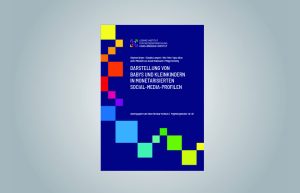
Study available for download (open access, in German only): Dreyer, Stephan; Lampert, Claudia; Thiel, Kira; Altun, Aysu (2026): Darstellung von Babys und Kleinkindern in monetarisierten Social-Media-Profilen [Depictions of Babies and Toddlers in Commercialized Social Media Profiles]. In collaboration with Azade Kakavand and Philipp Kessling. Verlag Hans-Bredow-Institut, April 2026 (Hans-Bredow-Institut Working Papers | Project Results No. 82). https://doi.org/10.21241/ssoar.109268, ISSN 1435- 160-0, ISBN 978-3-87296-201-0
Summary of the Study
A total of 359 profiles belonging to 201 family influencers were analyzed across three platforms. More than half of the influencers use two to three platforms simultaneously. This multi-platform presence correlates with a higher total reach. The sample has a total reach of 100 million followers. For the analysis of the portrayal of children, 10,095 posts with 156,362 scenes were included.
The findings show that, while children are frequently present in family influencer content, they are rarely consistently central. Overall, children are featured in 44 percent of all posts. Proportionally, the sample contains the most depictions of children on YouTube and the fewest on TikTok.
Over two-thirds of influencers use measures to obscure children’s identities, such as camera angles, overlays, and pixelation. Nevertheless, children are identifiable in approximately one-third of the posts, particularly on high-reach accounts, with children aged 0 to 2 being overrepresented.
The findings from the qualitative analysis also reveal clear differences in the focus of individual accounts. In some cases, it is evident that influencers gave early consideration to protecting their children’s privacy while continuing their activities as influencers.
Other family influencers openly share details of their family life, including depictions of their children, without concealing their faces. There are also differences in the number and age of the children. Older children sometimes perform in front of and with the camera.
Portraying children on monetized social media profiles raises significant legal and ethical questions, particularly regarding data protection laws, personality rights, and the privacy of children’s families and personal lives. Commercially using children’s presence and living environments can conflict with their need for protection, and the duty of care that parents have towards their children may reach structural limits due to conflicting economic interests.
Both the quantitative and qualitative analyses show that children often serve as proof of authenticity, a means of interaction, and a community booster. From a child ethics perspective, this is problematic because children are used for economic purposes without the ability to consent to this exploitation. The consequence is not so much the isolated violation of a child’s dignity as it is the potentially lasting impairment of their personal integrity and right to an open future. The permanence and repetition of depictions of children create digital traces that can generate external expectations, preempting the child’s future self-definition.
Based on empirical data and the legal and media ethical framework, the study proposes specific actions for legislators, policymakers, regulatory authorities, youth welfare services, platform operators, the advertising industry, parents, and influencers.
Although quantitative and qualitative data suggest that most family influencers take care to ensure their children are not shown in promotional posts or recognizable, some influencers cannot resolve the tension between commercial interests, social media practices, and parental care. Others are unaware their account is a monetized platform with different rules for depicting children than in “sharenting” by private individuals. It is essential to develop awareness-raising measures, as well as corresponding information and support services, to prevent the careless depiction of children. Additionally, options for improved legal oversight and less bureaucratic, less invasive procedures for parents who wish to comply with the law should be discussed. Additionally, options for retroactively modifying content should be identified to help parents fulfill their responsibilities and duties as caregivers.
BredowCast
In the BredowCast episode “Family Influencing: Kinderdarstellungen auf Instagram, TikTok und YouTube” Stephan Dreyer discusses the study’s findings and the resulting recommendations for action (in German).