Transnational Media Histories: Cooperation with Macquarie University, Sydney

Relationships between media and by media do not stop at borders. The cooperative project with the Macquarie University in Sydney investigates such transnational histories of media.

From 2015 to 2018, the Research Centre Media History at Universität Hamburg and the Centre for Media History at Macquarie University in Sydney work together to research and write a history of media beyond national boundaries and enable transnational research from a globally “entangled” perspective. This project aims to establish a close collaboration between Hamburg and Sydney in the research and teaching of media history. It will facilitate frequent exchanges of senior and junior researchers, including postgraduates, to discuss and explore “transnational media histories” as well as joint workshops, conferences and research projects. The academic starting point of “Transnational Media Histories”, funded by the DAAD [German Academic Exchange Service], is the research approach on “Entangled Media Histories”, which assumes a mutual entanglement.

Project Description

The new German-Australian cooperative network connects two institutions that decidedly work on the history of media: the Research Centre Media History at Universität Hamburg and the Centre for Media History at Macquarie University in Sydney. The starting point of this cooperation is the research approach of “entangled media histories”, drawing upon and contributing to histoire croisée, connected history, and Verflechtungsgeschichte in the field of media and communication studies. Thus, the project, which is funded by the DAAD [German Academic Exchange Service] from 2015 to 2019, aims to research transnational relations of and by media. The project “Transnational Media Histories” focuses on the frequent exchanges of researchers and PhD students in the field of communication and media history between Hamburg and Sydney.

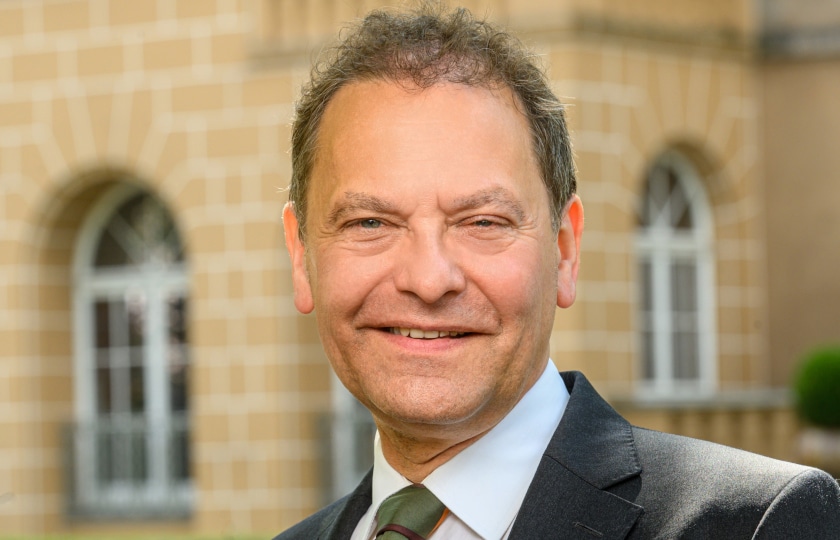
The stay of Dr. Hans-Ulrich Wagner, head of the Research Centre Media History, as a visiting fellow at Macquarie University in November/December 2015, led to this project. In a keynote speech with the title “Chances and Challenges of Doing Transnational and Global Entangled Media History”, he outlined the project topic. In May/June 2016, Prof. Dr. Bridget Griffen-Foley, director of the Centre for Media History at Macquarie University, was a guest researcher at the Insitute for Media and Communciation at Universität Hamburg and the Research Centre Media History.

Furthermore, Mike Nugent, a PhD Student from Sydney, was a guest researcher at the Research Centre Media History. A common basis will be established through seminar papers, keynotes, conferences and visits. The medium-term goal is the stabilisation of academic exchange, as well as the realisation of a joint transnational project.
Project Details

Overview

Project start: 2015; Project end: 2017

Programme Area: Program Area 1 Social Functions of Communication and Media

Research Group: Media History

Persons involved

Contact information

Dr. Hans-Ulrich Wagner

Dr. Hans-Ulrich Wagner

Head of the Research Group Media History

Leibniz Institute for Media Research, Hans-Bredow-Institut (HBI)
Warburgstraße 30 B
20354 Hamburg

Similar projects & publications

Cover Stellungnahme Digitale Medien-Staatsvertrag
Available for Download

Expert Opinion on the State Treaty on Digital Media, Part 2

Wolfgang Schulz, Stephan Dreyer, Jasmin Hamid Habib, Matthias C. Kettemann, and Tobias Mast comment on the proposal by the State Broadcasting Commission regarding the “State Treaty on Digital Media, Part 2” (DMStV) in an expert opinion on the planned reform of the State Media Treaty and the State Treaty on the Protection of Minors in the Media.

First page of the article: The German Media Landscape Under the Control of Global Intermediaries
Article in Media Perspektiven

The German Media Landscape Under the Control of Global Intermediaries

The German media industry is growing, but it is primarily international platform companies that are benefiting from this trend. In the journal "Media Perspektiven", Lukas Barbutev, Tobias Mast, and Hendrik Theine analyze the consequences of the increasing market power of Google, Meta, and Amazon for the German media landscape.

Cover of the journal
Recently Published

M&K 3–4/2026 Has Been Published

The articles in issue 3–4/2026 of M&K address the architectural paradox of federated platforms (Simon Crins), a comparative analysis of media use among Danish and German police officers (Jochen Kinast / Johannes Riis, in English), and an exploratory typology of German fact-checkers (Johanna Radechovsky). All articles are available for download free of charge.

Cover of the journal "Journalism"
Open Access Publication

Arms Deliveries to Ukraine: Viewpoint Diversity in German Media

Gregor Wiedemann, Laura Liebig, and Katharina Kleinen-von Königslöw examined how German leading media outlets covered arms deliveries to Ukraine. Using AI-assisted content analysis, they evaluated articles from 14 leading German media outlets published in 2022 and 2023.

Cover des Routledge Handbook of News Agencies
Chapter in Routledge Handbook of News Agencies

The German Press Agency in the Routledge Handbook of News Agencies

Hans-Ulrich Wagner summarizes the key facts and the history of the German Press Agency (dpa) in his contribution. From its founding in the postwar period to the present day, he describes the agency’s defining values and principles, as well as the challenges it currently faces.

Cover of issue 14 / 2026 of the journal "Media and Communication"
Open Access Publication

Can the Quality of Online Discussions Be Automatically Assessed—and Improved?

In their publication, Patrick Frey, Cornelius Puschmann (ZeMKI, University of Bremen), Smita Bhattacharya, and Gregor Wiedemann (HBI) explore whetherAI can measure the quality of online discussions. The study demonstrates that AI can identify violations of norms and serve as a tool for crafting counterarguments tailored to specific debates.

Cover of the current issue of the magazine “KJug” (3/2026)
New KJug Issue Has Been Published

Protecting Children and Young People in an Increasingly Digitalized World

In the latest issue of KJug, Claudia Lampert presents the EU Kids Online research consortium's findings on how children and adolescents view a potential social media ban. Kira Thiel shares insights from her dissertation, which examines how adolescents cope with problematic online experiences and the strategies they use to manage them.

Nonfiction Book Cover: No Child's Play
Recently Published!

No Child’s Play – Protecting Minors in the Digital Age

In his nonfiction book, Stephan Dreyer analyzes the complex field of youth media protection. Through his examination of legal regulations, actual usage, and technological developments, he offers valuable insights for individuals involved in this topic in the realms of practice, administration, politics, and academia.

Zwei Jugendliche, zu sehen von hinten oben, sitzen auf einer Mauer und blicken auf ein Handy
New DFG Research Project

Safeguarding Epistemic Trust in Adolescents: Conceptual Approaches and Policy Options

The interdisciplinary DFG project, “SETA: Protecting the Epistemic Trust of Adolescents: Conceptual Approaches and Policy Options,” conducted in collaboration with the Weizenbaum Institute, examines the state’s obligation to protect the epistemic trust of 13- to 17-year-olds without infringing on freedom of expression and information.

Cover des Arbeitspapiers Reuters-Bericht 2021
Report for Download

Reuters Institute Digital News Report 2021

The Reuters Institute Digital News Report, which provides an international comparison of news consumption, is being published for the tenth consecutive year.

1 2 3 … 36

Page 1 from 36

Newsletter

Information about current projects, events and publications of the institute.

Subscribe now