Valorising the Past: Practices of Appropriating the Past

Various actors negotiate the past and make it relevant for the present in new communicative practices. The Research Lab “Practices of Appropriation” takes a closer look at historical memes and TikTok videos as well as historical Instagram and Twitter accounts.

Within the framework of the Leibniz research alliance “Value of the Past”, Research Lab 3.2 “Practices of Appropriation” explores new communicative practices of appropriating the past that can be observed against the backdrop of media change. The projects and networks examine the negotiation processes of history and the past in the public sphere or in partial public spheres with regard to which historical events and topics are declared relevant to the present by different actors.

We will explore the extent to which the multiplication of communicative spaces in which the past is discussed challenges previously valid monopolies of interpretation and creates new ones. In times when people co-produce their historical knowledge with recourse to a broad spectrum of different media, from the feuilleton of transnationally received newspapers to TikTok videos to Hitler and Holocaust memes, consensus in the culture of memory is becoming increasingly difficult. Due to the worldwide availability of communication services and media representations, especially nation-state societies are experiencing a surge of heterogenisation.

These dynamics are examined within the Lab’s work in various fields of action. For example, historical-political interventions and media strategies of populist and new-right actors will be analysed. The focus continues to be on remembrance practices in history classes, in which members of different generations meet with different media repertoires or the debate about rituals of remembrance in memorials as well as on anniversaries and new forms of historical narration in interactive digital media.

The Leibniz Institute for Media Research | Hans-Bredow-Institut (HBI) is a full member of the Leibniz research alliance “Value of the Past”Dr. Hans-Ulrich Wagner coordinates together with Dr. habil. Barbara Christophe from the Leibniz Institute for Educational Media | Georg Eckert Institute (GEI) the Research Lab 3.2 “Practices of Appropriation” within the research network.

Past on Social Media

As a small case study of a current social media memory project, Daria Chepurko, Ken Phan, Kira Thiel and Dr. Hans-Ulrich Wagner examined the Instagram account “@ichbinsophiescholl“. Offered by the public broadcasters Südwestrundfunk (SWR) and Bayerischer Rundfunk (BR) this account claims to offer an honest and an intimate perspective on the young resistance fighter Sophie Scholl during the Third Reich by having her appear as a present-day social media actor. The results of the research are summarized in the blog dossier Sophie Scholl auf Instagram: Eine kommunikations- und geschichtswissenschaftliche Untersuchung [Sophie Scholl on Instagram: A Communication and Historical Study] published on the Media Research Blog of the HBI.

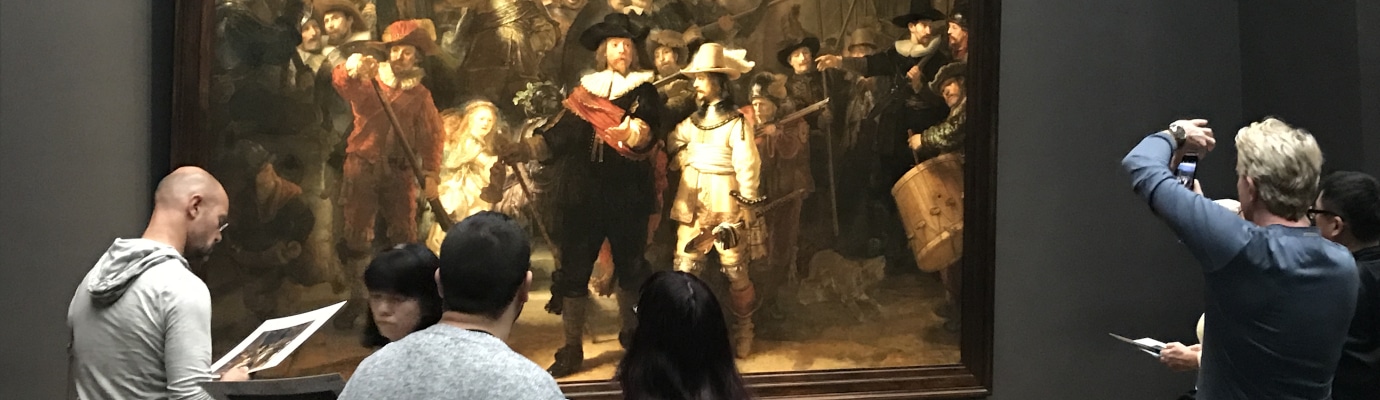
Photo (from the Amsterdam Rijksmuseum): Hans-Ulrich Wagner
Project details

Overview

Start of the term: 2021; End of term: 2026

Persons involved

Third-party funder

Leibniz Association

Contact person

Hans-Ulrich Wagner

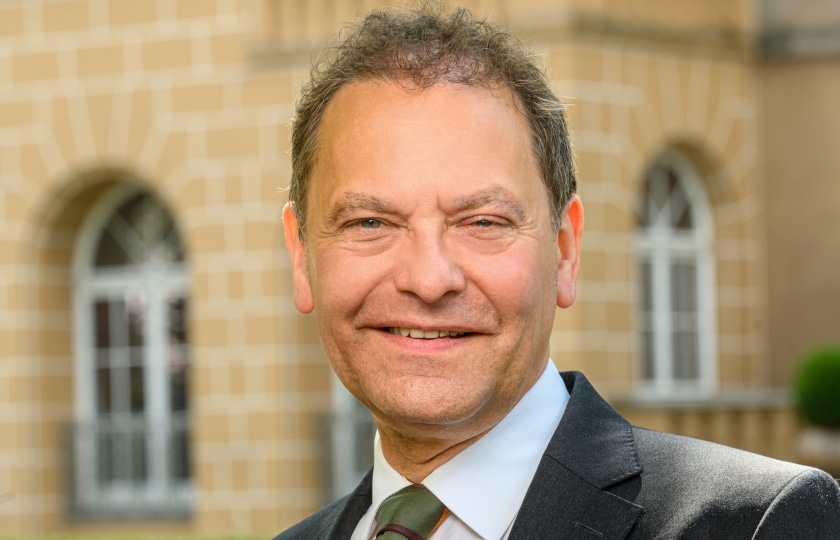
Dr. Hans-Ulrich Wagner

Senior Researcher Media History

Leibniz Institute for Media Research, Hans-Bredow-Institut
Warburgstraße 30b
20354 Hamburg

Similar projects & publications

Cover des Arbeitspapiers Nr. 84
Publikation Brief Report in English

Babies and Toddlers in Monetised Social Media Profiles

Stephan Dreyer, Claudia Lampert, and Kira Thiel published an English summary of their study on babies and toddlers in family-influencing content. They present their findings on how babies and toddlers (ages 0–5) are depicted in German-language, commercially oriented social media profiles on Instagram, TikTok, and YouTube.

Cover der Zeitschrift KIR
Publikation Published on Beck-online

Freedom of Expression in the Age of AI

In their article in a journal on artificial intelligence and law, Prof. Dr. Wolfgang Schulz and Moritz Wiechert analyze the first German case law on automatically generated content. In doing so, they highlight the fundamental challenges facing traditional freedom of expression law in the age of AI.

Cover of the publication
Publikation Recently Published!

Avoiding the News But Still Feeling Connected?

How are different forms of news avoidance related to various types of individual public connection? The article by Julia Behre, Lisa Merten, and Uwe Hasebrink suggests that avoiding the news does not necessarily mean turning away from public life.

Cover Report
Publikation Open Access Publication

German Public Broadcasting Corporations in the Age of Streaming Platforms and AI

In her Friedrich Ebert Foundation publication project, Magdalena Stratmann describes how public service broadcasting in Germany addresses the challenge of fulfilling its legal mandate amid drastically changed conditions in the digital information ecosystem.

Historische Aufnahme des HR-Funkhauses am Dornbusch aus den 50ern
Projekt Media History Project

The History of the Regional Public Broadcasting Corporation of the Federal State of Hesse in the Postwar Period

In January 2029, the Regional Public Broadcasting Corporation of the Federal State of Hesse (Hessischer Rundfunk) will celebrate its 80th anniversary. To mark the occasion, Dr. Hans-Ulrich Wagner is conducting scholarly research on its origins. His research focuses specifically on corporate history, personnel decisions, and programming policy in the postwar period.

Cover Organizational Research Methods Journal
Publikation Open Access Publication!

Argument Mining for Organizational Research

How do organizations justify their decisions, establish legitimacy, and engage with their environment through communication? This article introduces aspect-based argument mining (ABAM) as a new method for answering these questions. ABAM can identify patterns of argumentation in large text corpora, such as the Twitter debate on nuclear energy in Germany.

Cover of the study “Social Cohesion” by Aktion Mensch
Publikation Open Access Publication

Social Cohesion – Experiences and Expectations of People with Disabilities Regarding Participation

Jan-Hinrik Schmidt and Milena Braun conducted a study on behalf of Aktion Mensch examining how people with disabilities perceive social cohesion in Germany. The study allows for a comparison with the general population and reveals that, despite being more likely to participate in politics and volunteer work, people with disabilities experience less social cohesion.

Cover of the working paper
Publikation Available for Download

Reuters Institute Digital News Report 2026: Findings for Germany

Since 2012, the Reuters Institute Digital News Survey has conducted annual, representative surveys in 48 countries to examine general trends and national differences in news consumption. As a cooperation partner, the Leibniz Institute for Media Research | Hans-Bredow-Institut is responsible for the German sub-study. The 2026 findings are now available for download.

Publikation Recently Published!

Exploring GPT Representation of Journalistic Culture

The study by Prof. Dr. Wiebke Loosen et al. examines how large language models (LLMs) such as ChatGPT can reflect journalistic value systems. To this end, the GPT-4o model was asked to answer questions from the “Worlds of Journalism Study,” which explores perceptions of journalistic roles, theories of knowledge, and ethical principles.

Publikation Recently Published

Visualizing Regulatory Ecosystems: The AI Act as a Case Study

The article by Magdalena Stratmann, Tobias Mast, and others was developed as part of the STEAM project, "Informing Regulatory Reasoning on Algorithmic Systems in Societal Communication with STEAM." It introduces Architectural Ecosystem Modeling, a visual method that makes the institutional structures of the AI Act visible. This method analyzes responsibilities and dependencies and identifies gaps, overlaps, and opportunities for coordination within the regulatory framework.

1 2 3 15

Page 1 from 15

Newsletter

Information about current projects, events and publications of the institute.

Subscribe now