Opinion Formation

The “Opinion Formation” research group investigates how people can form their own independent opinions and what is required to make this possible on the part of lawmakers, society, the media, and online platforms.

Public opinion does not emerge in a single place or through a single actor. It emerges from a complex interplay among citizens, the media, platforms, politics, academia, civil society, businesses, and, increasingly, automated systems.

All of these actors pursue different goals, operate under different conditions, and influence in various ways which issues gain visibility and how they are evaluated.

Digitalization, platformization, and the use of artificial intelligence are raising classic questions about the democratic public sphere anew.

  • What is needed for people to form opinions freely and with full knowledge of the facts?
  • How do platforms change the visibility of information?
  • What are the consequences of disinformation, misinformation, and targeted manipulation?
  • And what responsibilities do the media, platforms, the state, and society bear?

Photo by Annie Spratt/Unsplash
Overview

Last update: 24.09.2026

Blog Articles, News, Projects, Publications, Podcast Episodes

Cover of the journal New Media & Society
Open Access Publication

Personal Preferences When Searching for Political Information

Lisa Merten and five co-authors researched how personality traits and attitudes affect the search for political information. Their article has now been published open access in the journal New Media & Society.

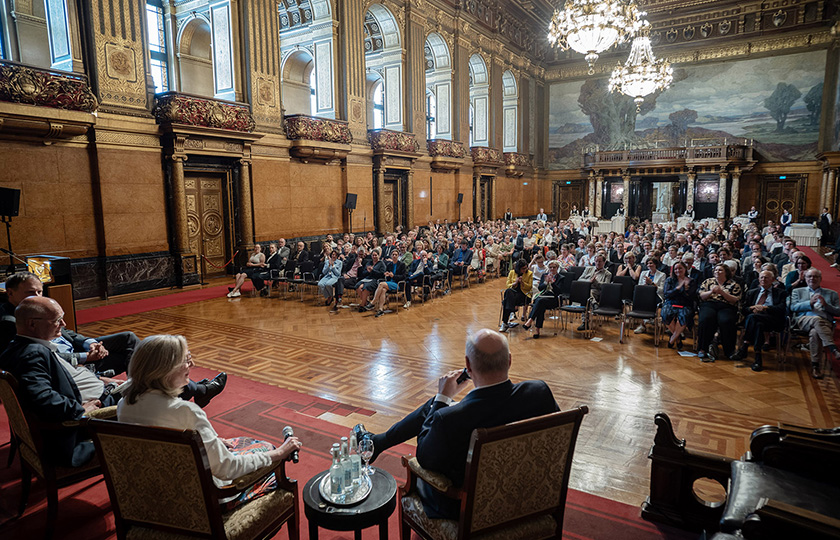
Blick von der Bühne im Festsaal des Hamburger Rathauses auf zahlreiches Publikum
HBI75 Event Review

We Celebrate 75 Years of Media Research!

With numerous guests from the fields of science, politics, culture, and media, we celebrated the 75th anniversary of the Hans-Bredow-Institut (HBI) on June 17 and 18, 2025. Since 1950, the institute has been researching the development of media communication and its impact on society – in an interdisciplinary, practice-oriented manner and considering the democratic foundations of public communication.

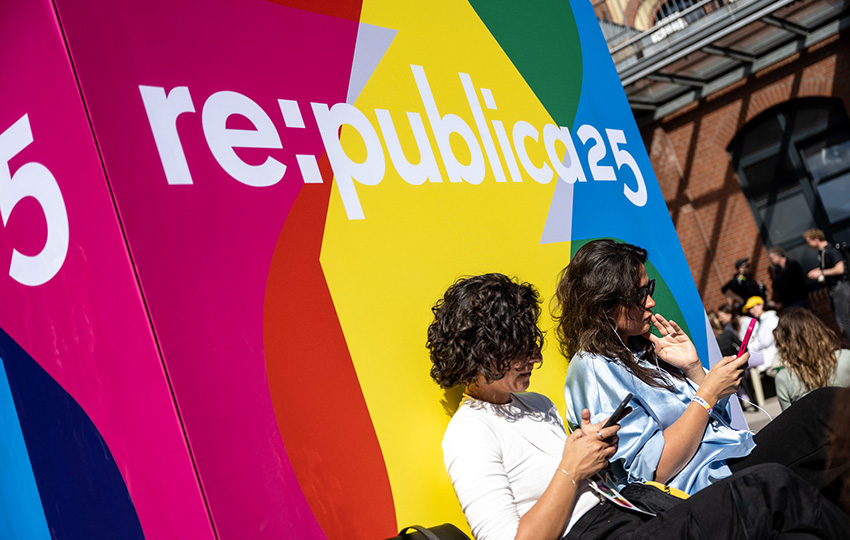
zwei junge Frauen sitzen auf ihr Handy blickend vor einem großen rot-gelb-grün-blauen Banner mit RePublica25-Logo
Presentations Available Online

The HBI at re:publica 2025

Jan Rau, Wiebke Loosen, Anna von Garmissen, Matthias Kettemann, and Katharina Mosene discussed new media actors, democratic discourse on platforms, and internet and AI regulation at re:publica25, which took place at STATION Berlin under the motto “Generation XYZ.” Recordings of the presentations are now available online.

Cover der Broschüre zum 75. Geburtstag
Brochure Available for Download

Facets of 75 Years Hans-Bredow-Institut

With this brochure. we take a look at the institute's development since 1950. While we do not claim to provide a complete history, we aim to highlight some of the institute's unique characteristics, showcasing moments in the past when these features were particularly evident.

Eine Gruppe junger Leute schaut auf ihr Handy
News Usage in International Comparison

German Findings of the Reuters Institute Digital News Report 2025

Trust in the news remains high in Germany. 45% of the adult online population believes that most news is generally trustworthy. At the same time, the majority of respondents believe that news produced by humans is more trustworthy than news generated by AI.

Cover des Arbeitspapiers "Für den Reuters Institute Digital News Report 2024  zur Nachrichtennutzung im internationalen Vergleich wurden zeitgleich Befragungen in 47 Ländern realisiert, um generelle Trends, aber auch nationale Besonderheiten erkennen zu können. Das HBI ist verantwortlich für die deutsche Teilstudie; es wird dabei von den Landesmedienanstalten und dem ZDF unterstützt.

Cover des Arbeitspapiers "Reuters Report 2025"
News Usage in International Comparison

Reuters Institute Digital News Report 2025 – Findings for Germany

The Reuters Institute Digital News Report 2025 examined news consumption internationally. To identify general trends and national characteristics, surveys were conducted simultaneously in 48 countries. The HBI conducted the German sub-study

Logo des Jubiläums: Der schriftzug 75 Jahre Medienforschung wird von buntem Konfetti umschwirrt
We Celebrate 75 Years of Media Research

From Radio to AI: Hans-Bredow-Institut Celebrates 75 Years of Media Research

The HBI is celebrating its 75th anniversary with a reception hosted by the Senate and a scientific event. Since the institute's founding in 1950, the media landscape has undergone significant changes. Through its research, the institute has kept pace with these changes and contributed to scientific development, as well as to the goal of providing relevant knowledge to politics, regulation, business, and civil society.

Leuchtende, von einer Decke hängende Lampen
New Leibniz Research Network

New Leibniz Research Network Strengthens Evidence-Based Science Communication

The Leibniz Research Network “Evidence-Based Science Communication” is set to counteract the increasing fragmentation of the research field from June 2025 onwards by strengthening the links between theory and practice. The HBI contributes its expertise in communication science to transfer research, including in the context of health communication.

Altes Zeitungsfoto von Hans-Bredow,
HBI 75: Founding History

How the Institute Got Its Name

On May 30, 1950, the Hans Bredow Institute was founded by the former Northwest German Broadcasting Corporation (the predecessor of NDR and WDR) and the University of Hamburg. This blog post describes the history of its founding and explains how the institute got its name.

Cover von Heft 2/2025 M&K
Recently Published

M&K 2/2025 Special Issue “Media Structures Revisited”

Issue 2/2025 of Media & Communication Science has been published as a special issue entitled “Media Structures Revisited,” edited by Josef Seethaler, Marlis Prinzing, Petra Herczeg, and Mark Eisenegger. The entire issue is available open access via the Nomos eLibrary.

Illustration Tortenstück mit TikTok Logo
Blog Dossier

Right-Wing Influence on the Internet

The Research Institute for Social Cohesion has published four blog posts examining the mechanisms, strategies, and platform dynamics that enable the radical right to gain media space, as well as ways to counteract this. Their analyses focus particularly on the TikTok platform.

Leonie Wunderlich hält ihren Doktorhut fest, der davonzufliegen droht
Successfully Completed Doctorate

Congratulations, Leonie Wunderlich!

Leonie Wunderlich has successfully defended her dissertation on “Information-Related Practises of Young People in the Hybrid Media System.” Congratulations, Leonie Wunderlich!

1 … 13 14 15 16 17 … 45

Page 15 from 45

Newsletter

Information about current projects, events and publications of the institute.

Subscribe now